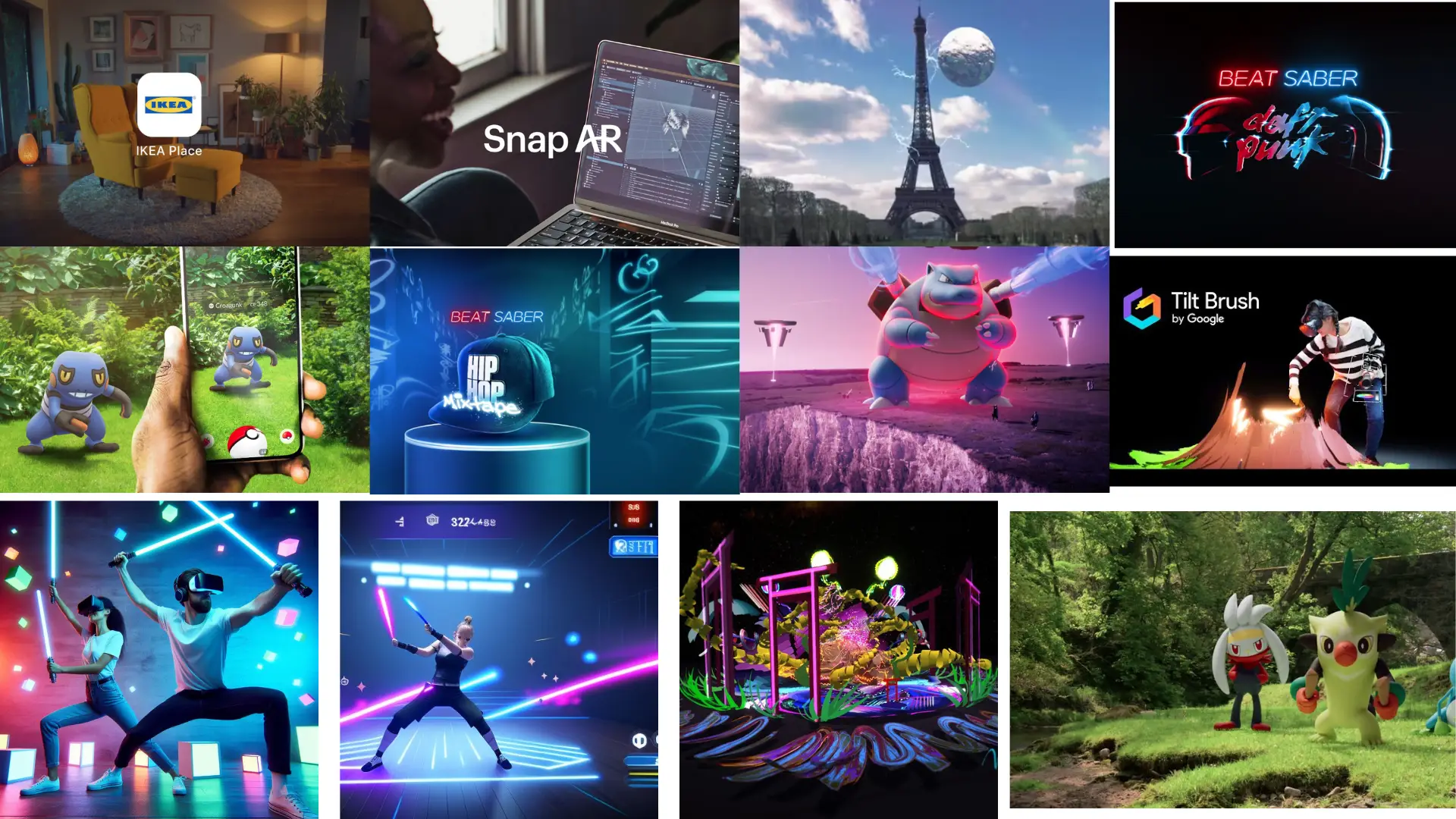
The world is rapidly changing, and the future is now. Augmented Reality (AR) and Virtual Reality (VR) are no longer confined to science fiction. They’re transforming how we engage with technology, creating new ways to interact with the world around us and offering immersive experiences we could only dream of a few decades ago. Let us dive deep into the Top Augmented and Virtual Reality Apps.
From games to shopping and even healthcare, AR and VR have reshaped industries and influenced our daily lives. In this article, we will explore the top AR and VR apps that are leading this transformation. But first, let’s briefly understand what AR and VR are and how they differ.
What Are AR and VR?
Augmented Reality (AR) overlays digital content onto the real world, enhancing the physical environment. Think of it as a layer of information or digital assets superimposed on the things you see in real life. On the other hand, Virtual Reality (VR) immerses users into a completely digital environment, isolating them from the physical world. While AR enhances reality, VR creates an entirely new one.
The Rise of AR and VR
Historical Background
While AR and VR seem like modern phenomena, their roots go back several decades. The concept of VR can be traced back to the 1960s, with the invention of the “Sensorama,” a machine designed to simulate multi-sensory experiences. However, it wasn’t until the late 20th and early 21st centuries that these technologies became accessible to the public.
In the early 2010s, AR technology gained traction with the release of devices like Google Glass. VR followed suit with the launch of consumer-grade headsets such as the Oculus Rift in 2012. Since then, AR and VR technologies have advanced significantly, with improvements in hardware, software, and user experience driving their widespread adoption.
Current Trends
Today, AR and VR are no longer niche technologies; they are mainstream. In AR, smartphones and wearable devices like Microsoft HoloLens have made it easier for users to experience enhanced reality. Meanwhile, VR headsets like the Meta Quest and PlayStation VR have made immersive experiences more accessible than ever.
Developments in artificial intelligence and machine learning are also advancing AR and VR, making experiences more intuitive and interactive. Additionally, cloud computing has enabled large-scale VR applications and multiplayer VR games, allowing for shared experiences across vast distances.
Impact on Various Industries
AR and VR have touched nearly every industry. In gaming, VR has brought a new level of immersion that was previously unattainable, with games like “Half-Life: Alyx” and “Beat Saber” showcasing the potential of this medium. In healthcare, VR is being used for surgical training and rehabilitation, while AR is being employed to assist surgeons during operations by providing real-time data.
In education, AR and VR have revolutionized learning by offering interactive lessons and immersive historical reenactments. For instance, students can explore the ancient ruins of Greece without leaving their classrooms, thanks to apps like Google Earth VR.
Retail is another area where AR has made significant strides. Apps like IKEA Place allow customers to visualize how furniture will look in their homes before making a purchase, reducing the guesswork in shopping.
Top Augmented Reality Apps
Pokémon GO

When Pokémon GO was released in 2016, it took the world by storm. This AR game allows players to explore the real world while catching virtual Pokémon, blending gaming with physical exploration. It quickly became a global sensation and has maintained a strong player base ever since.
The key feature of Pokémon GO is its ability to superimpose Pokémon in real-world locations, encouraging users to get outside and explore. The game also hosts community events and special challenges, which further enhance the user experience.
Players have praised Pokémon GO for its health benefits, as it encourages walking and outdoor activity. User reviews often highlight the social aspect of the game, with players forming communities and attending events together. Niantic’s Pokémon GO remains one of the best examples of AR technology making a real-world impact.
IKEA Place

For shoppers, IKEA Place is a game-changer. This app allows users to visualize IKEA furniture in their homes using AR. By placing 3D models of furniture into your room through your smartphone’s camera, you can see exactly how a piece will fit and look in your space.
Key features of IKEA Place include its extensive library of 3D models and the app’s ability to scale furniture accurately based on room measurements. This helps users make informed decisions before purchasing items.
The app has received positive feedback from users who appreciate the ability to “try before they buy.” Many customers share success stories about how IKEA Place helped them avoid purchasing furniture that wouldn’t fit or look good in their homes. IKEA Place exemplifies how AR can enhance the shopping experience.